|
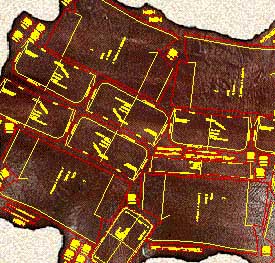
CAD for leather goods and small leather goods |  |
 |
 |
|
CAD for leather goods and small leather goods | |
|
|
| Mozart | Liszt | Virtual-Design | Support | Contacts |
| Mozart is a CAD realized following the requests and
suggestions of leather goods pattern-makers to simplify and expand their work being
them free to design according to their ideas. Mozart requires AutoCAD® or ZWCAD®. The license of Mozart does not include the license of AutoCAD® or ZWCAD® Mozart 8 is available for AutoCAD® up to version 2026 and for ZWCAD® up to version 2025. |
|
Quick learning Built on pattern-makers' requirements Mozart shares his working method giving full liberty to design the model. The pattern-maker can concentrate himself on the model to be realized. He does not have to code the materials or pieces before or during the drawing. Freely customizable The user can easily change many settings of Mozart: colors, the method of calculating the bill of materials and the bill of working times and many other parameters. Mozart can also load and use custom toolbars, scripts and commands written by the user. |
|
|
Flexibility The user is free to choose the names of the patterns and their hierarchy. Each pattern is a single file and Brands, Lines, Seasons etc. can be organized by folders. Each pattern is independent from the others and can be copied or moved in whole or in part from one folder to another like any other file. The bill of materials and the bill of working times can be performed in different ways and the reports are produced as ASCII text or Excel document. |
|
Data exchange The patterns can be read using many others CAD programs. The cutting can be done using a wide range of machines from vertical or flatbed plotters to knife, laser or water-jet cutting machines. The bill of materials, the bill of accessories and the bill of working times can be exported to others data management systems. Development The open structure of Mozart means it can be constantly improved according to users suggestions and requests. The upgrade of Mozart does not oblige the user to upgrade the other components of the CAD system. Plug-ins increase the power and the flexibility of Mozart. |
|
| Plug-ins add specific functions to Mozart. The user himself can write his own plug-ins, Mozart will automatically load them. Plug-ins allow to customize Mozart's installations to the needs of the user and reduce the cost because they avoid the purchase of what is not needed. Users can request the development of personal plug-ins to create special reports or drawing functions. On request personal plug-ins are not available to other users in order to protect their confidentiality. |
An ASPack unpacker is not a single tool but a category of methods and software designed to reverse the packing process, restoring the original, unpacked executable to disk for analysis, debugging, or patching.
Since the Jordans tutorial is not a formal paper but the canonical guide, I will summarize its as a structured paper-equivalent below.
There are several critical reasons why professionals seek out or build unpackers: aspack unpacker
Most reverse engineering clauses in EULAs prohibit unpacking, but security research is often exempted under "good faith" testing (US DMCA Section 1201 exceptions). Always operate within your authorized scope.
Extremely easy – just drag and drop. Cons: Vulnerable to anti-unpacking tricks. ASPack 2.4+ introduced anti-dumping features that break simple static unpackers. An ASPack unpacker is not a single tool
Unpacking is the process of reversing the packing operation to retrieve the original executable from memory. This allows analysts to:
To build an effective unpacker, you must understand the packer’s architecture. ASPack works as follows: Always operate within your authorized scope
Debuggers like OllyDbg and x64dbg support scripting languages (e.g., ODbgScript). Scripts automate the manual process.
. While packing is often used for legitimate reasons—such as reducing file size and protecting intellectual property—it is also a common tactic for obfuscating malicious code to evade antivirus detection. The Mechanics of ASPack
All product names, brand names or trademarks named here belong to their respective holders. |